
How to Season a Carbon-Steel Wok
Strip the factory coating, build the first layer of patina, and keep it. Twenty minutes of work that decides how the pan behaves for years.
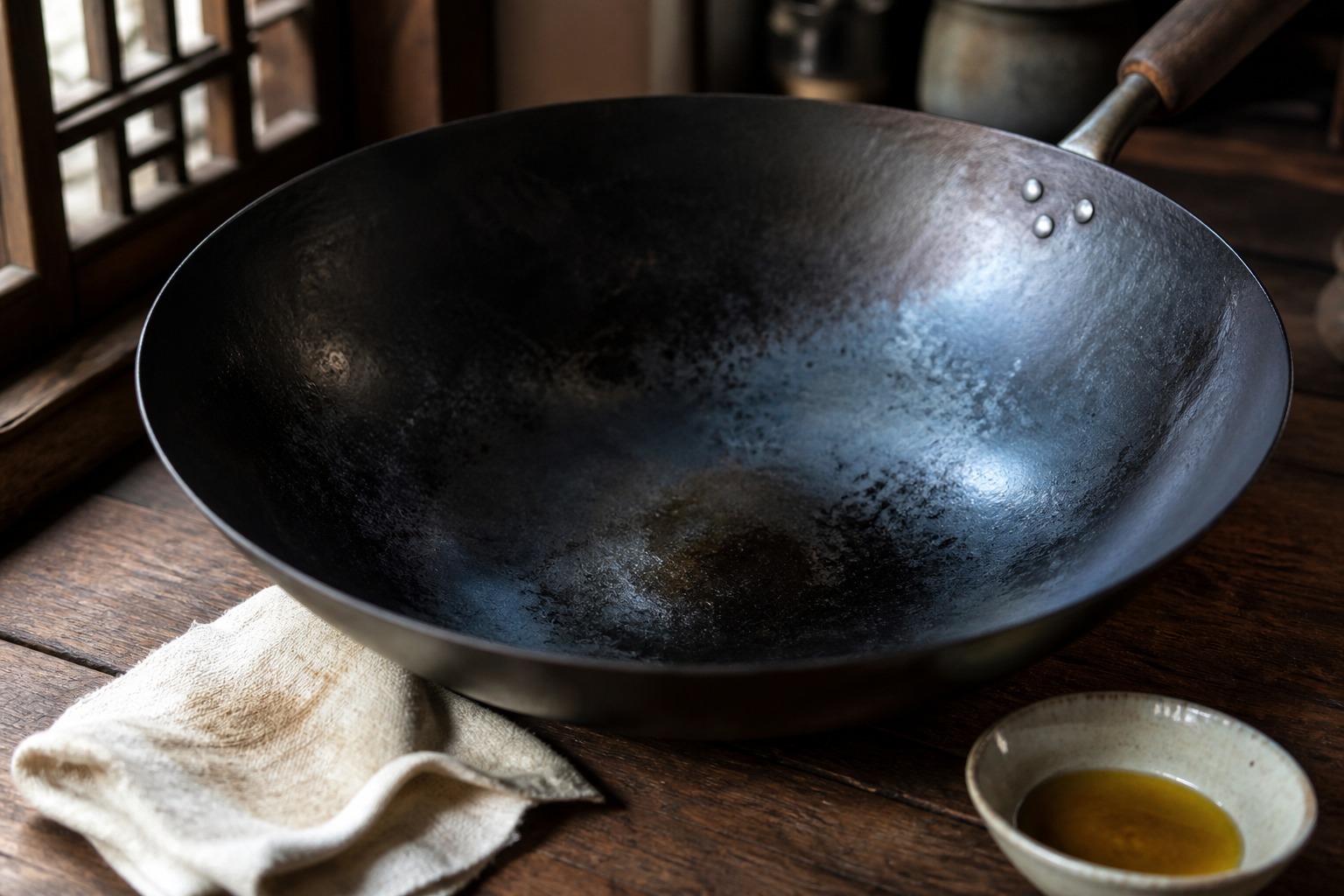
A new carbon-steel wok is not ready to cook in. It ships coated in a food-safe anti-rust lacquer that has to come off, and the bare steel underneath needs a layer of polymerized oil before anything will release from it.
This takes about twenty minutes and you only do the full version once.
Step 1: Strip the factory coating
Scrub the wok inside and out with hot water, dish soap, and steel wool. Be thorough and be aggressive — this is the only time soap and steel wool should ever touch this pan. You are removing a lacquer, and any of it left behind will flake into your food.
Some woks make this easy by having a visibly different sheen where the coating is. Rinse and dry completely.
Step 2: Heat until it changes color
Put the dry wok on your highest burner. Within a minute or two the steel will start to change color — usually to a straw yellow, then blue, spreading outward from the hottest point.
Tilt and rotate the wok so the color works its way up the sides. Ten minutes or so gets most of a 14-inch wok. This is normal, permanent, and the beginning of the patina.
Turn on your extractor and open a window. There will be smoke.
Step 3: Oil it
Take the wok off the heat for a moment and add about a tablespoon of high-smoke-point oil — grapeseed, canola, or peanut. Using tongs and a folded paper towel, wipe it over the entire interior surface, then wipe most of it back off.
This is the step people get wrong. You want the thinnest possible film, so thin the wok looks barely damp rather than wet. Excess oil polymerizes into a sticky, uneven, gummy layer instead of a hard one.
Step 4: Heat until it stops smoking
Return the wok to high heat. It will smoke heavily, then the smoke will taper off. When it stops, that layer has polymerized — cross-linked into a hard, slick coating bonded to the steel.
Repeat steps 3 and 4 two or three times. Each pass darkens the surface.
Step 5: Cook in it
The rest of the seasoning happens through use, and it happens faster with fatty, high-heat cooking. A traditional first dish is a large batch of Chinese chives or scallions fried in a generous amount of oil. Fried rice works nearly as well.
Expect the wok to look blotchy and uneven for the first month. That is not failure, that is the patina building. Somewhere around the tenth use it starts going evenly dark and genuinely non-stick.
Keeping it
Wash with hot water and a bamboo brush while it is still warm. No soap, no dishwasher, no soaking.
Dry it on the burner, not on a rack. Thirty seconds on the flame drives off water that would otherwise cause rust overnight.
Wipe on a very light coat of oil if you cook infrequently or live somewhere humid.
If it rusts, do not panic. Scrub the rust off with steel wool and re-season from step 2. A carbon-steel wok is essentially impossible to ruin permanently.
What to avoid early on
Acidic and watery cooking strips young seasoning. Skip tomato-heavy dishes, long simmers, and anything with a lot of vinegar for the first several weeks. Once the patina is established, none of it matters much.
What we use
The specific equipment and ingredients behind this guide.
- Grapeseed or canola oil
High smoke point and polymerizes cleanly. Olive oil and butter both burn well below the temperature seasoning needs.
- Bamboo wok brush
Scrubs stuck food off with hot water and no detergent, which is the whole trick to keeping seasoning intact.
- Steel wool
Only for the initial strip of the factory anti-rust coating. Never touch a seasoned wok with it.
Keep reading
- What Is Wok Hei — And Can You Get It at Home? The smoky 'breath of the wok' that makes restaurant stir-fries taste different. What actually causes it, and how close a home stove can realistically get.
- Velveting: Why Restaurant Chicken and Beef Are So Tender The Chinese restaurant technique behind silky stir-fried meat. Three methods, when to use each, and why baking soda works on cheap cuts.
- 12 Chinese Pantry Essentials Worth Buying The sauces, vinegars, and pastes that unlock most Chinese recipes. What each one does, what to buy, and the three you can skip at first.