
12 Chinese Pantry Essentials Worth Buying
The sauces, vinegars, and pastes that unlock most Chinese recipes. What each one does, what to buy, and the three you can skip at first.
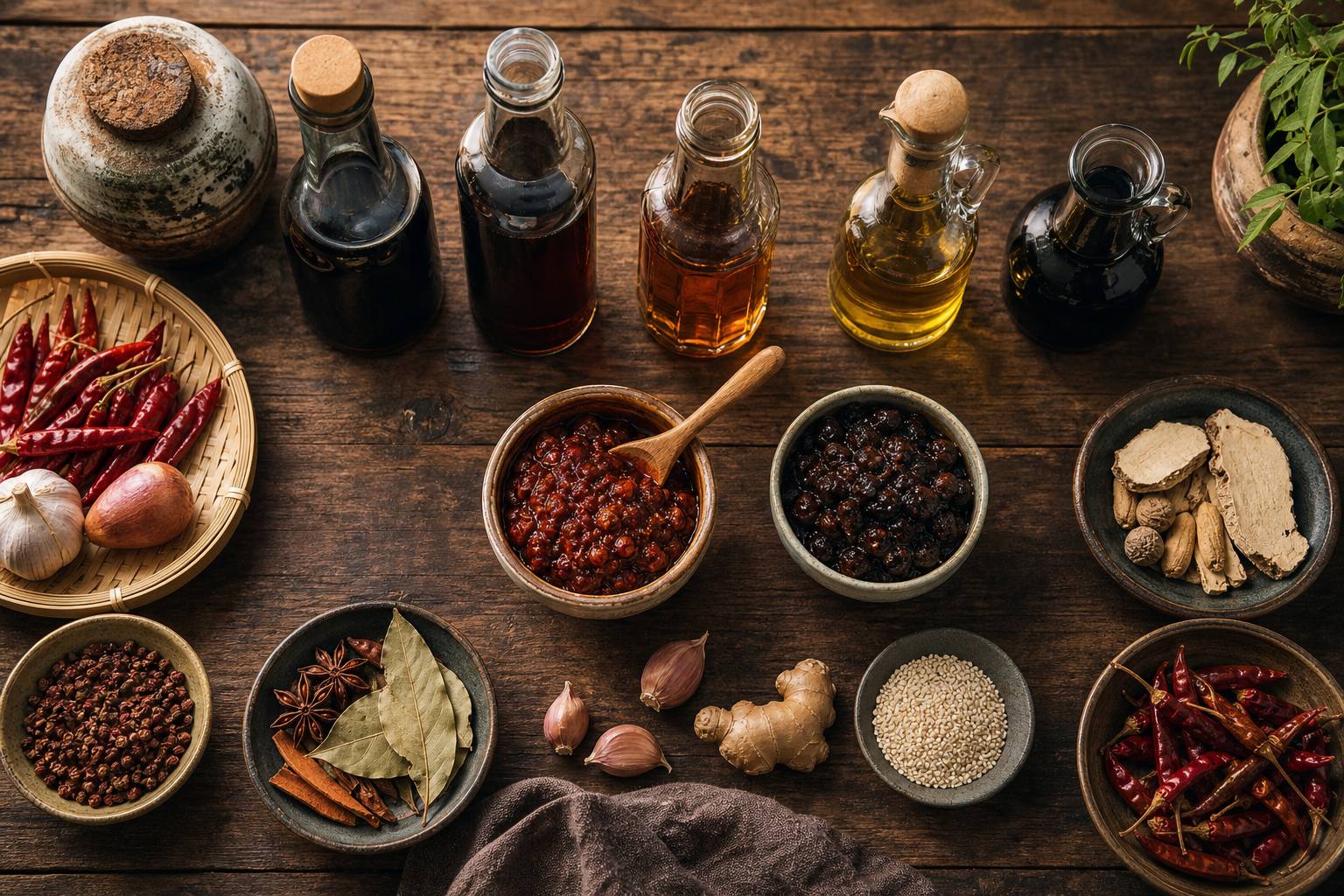
The barrier to cooking Chinese food at home is rarely technique. It is that a recipe calls for four things you do not own, so you cook something else instead.
The good news is that the list is short and almost everything on it keeps for a year or more. About $60 of shopping unlocks most of what is on this site.
The essential seven
1. Light soy sauce (生抽) — Your everyday salt. Thin, salty, savory. When a recipe just says “soy sauce,” this is what it means.
2. Dark soy sauce (老抽) — Thicker, darker, slightly sweet, barely salty. Used in small amounts for color. This is the ingredient behind that deep mahogany brown you cannot reproduce with light soy alone.
3. Shaoxing wine — Fermented rice wine used in marinades and to deglaze. Its job is removing the raw, gamey edge from meat and adding a background sweetness. Dry sherry is the accepted substitute.
4. Chinkiang black vinegar — Aged, malty, faintly sweet. Nothing in a Western pantry tastes like it. Essential for dumpling dipping sauce, hot and sour soup, and the sour half of kung pao chicken.
5. Toasted sesame oil — A finishing oil. Never fry in it. Add a teaspoon at the very end, off the heat, and it perfumes the whole dish.
6. Oyster sauce — Thick, savory, faintly sweet. The backbone of Cantonese stir-fries like beef and broccoli. Vegetarian mushroom “oyster” sauce works well.
7. Doubanjiang (chili bean paste) — Fermented broad beans and chili. This is the soul of Sichuan cooking. Buy Pixian doubanjiang if you can; it is fermented far longer and the difference is not subtle.
The next five
8. Fermented black beans (豆豉) — Salty, funky, intensely savory. Rinse before using. A tablespoon transforms steamed fish or stir-fried greens.
9. Chili oil with sediment — The sediment is the point. Lao Gan Ma is the default supermarket option and genuinely good.
10. Sichuan peppercorns — Not actually pepper. They produce a citrusy, tingling numbness called málà. Buy whole and grind fresh; ground powder goes flat in weeks.
11. Ya cai (芽菜) — Yibin preserved mustard greens. Narrow use, but there is no substitute — it is what makes dan dan noodles taste right.
12. White pepper — Dustier and more floral than black pepper. It is the “hot” in hot and sour soup and appears throughout Cantonese cooking.
What you can skip at first
Five-spice powder — Used less often than its fame suggests, and easy to overdo.
Hoisin sauce — Mostly for char siu and as a dipping sauce. Buy it when a recipe calls for it.
MSG — Genuinely useful and thoroughly rehabilitated, but not necessary while you are learning. Add it when you can taste what it is doing.
A note on where to buy
An Asian grocery will be cheaper and better stocked than any Western supermarket, often by half. If you do not have one nearby, everything above is available online, and these are shelf-stable products that ship well. Buy the small bottles first — some of these are strong, distinctive flavors and you will want to find out which ones you actually reach for.
What we use
The specific equipment and ingredients behind this guide.
- Light soy sauce (生抽)
Your default salt in almost every recipe. Pearl River Bridge or Lee Kum Kee are both reliable and widely stocked.
- Dark soy sauce (老抽)
Thicker, molasses-like, barely salty. A teaspoon gives braises and noodles that deep takeout brown.
- Shaoxing wine
Goes into most marinades and deglazes. Buy drinking-grade rather than the salted cooking version if you have the choice.
- Chinkiang black vinegar
Malty and mellow, nothing like Western vinegar. Essential in dumpling dips, hot and sour soup, and kung pao.
- Pixian doubanjiang
The fermented chili bean paste behind mapo tofu and twice-cooked pork. Look for Pixian on the label — the generic stuff is much flatter.
- Toasted sesame oil
A finishing oil, never a cooking oil. Add it off the heat or the aroma cooks straight off.
- Oyster sauce
Savory depth and body in Cantonese stir-fries. Check that oyster extract is near the top of the ingredient list.
Keep reading
- What Is Wok Hei — And Can You Get It at Home? The smoky 'breath of the wok' that makes restaurant stir-fries taste different. What actually causes it, and how close a home stove can realistically get.
- Velveting: Why Restaurant Chicken and Beef Are So Tender The Chinese restaurant technique behind silky stir-fried meat. Three methods, when to use each, and why baking soda works on cheap cuts.
- Choosing a Wok for an American Stove Flat bottom or round, carbon steel or cast iron, what size — and why the wok most people buy first is the wrong one.