
Velveting: Why Restaurant Chicken and Beef Are So Tender
The Chinese restaurant technique behind silky stir-fried meat. Three methods, when to use each, and why baking soda works on cheap cuts.
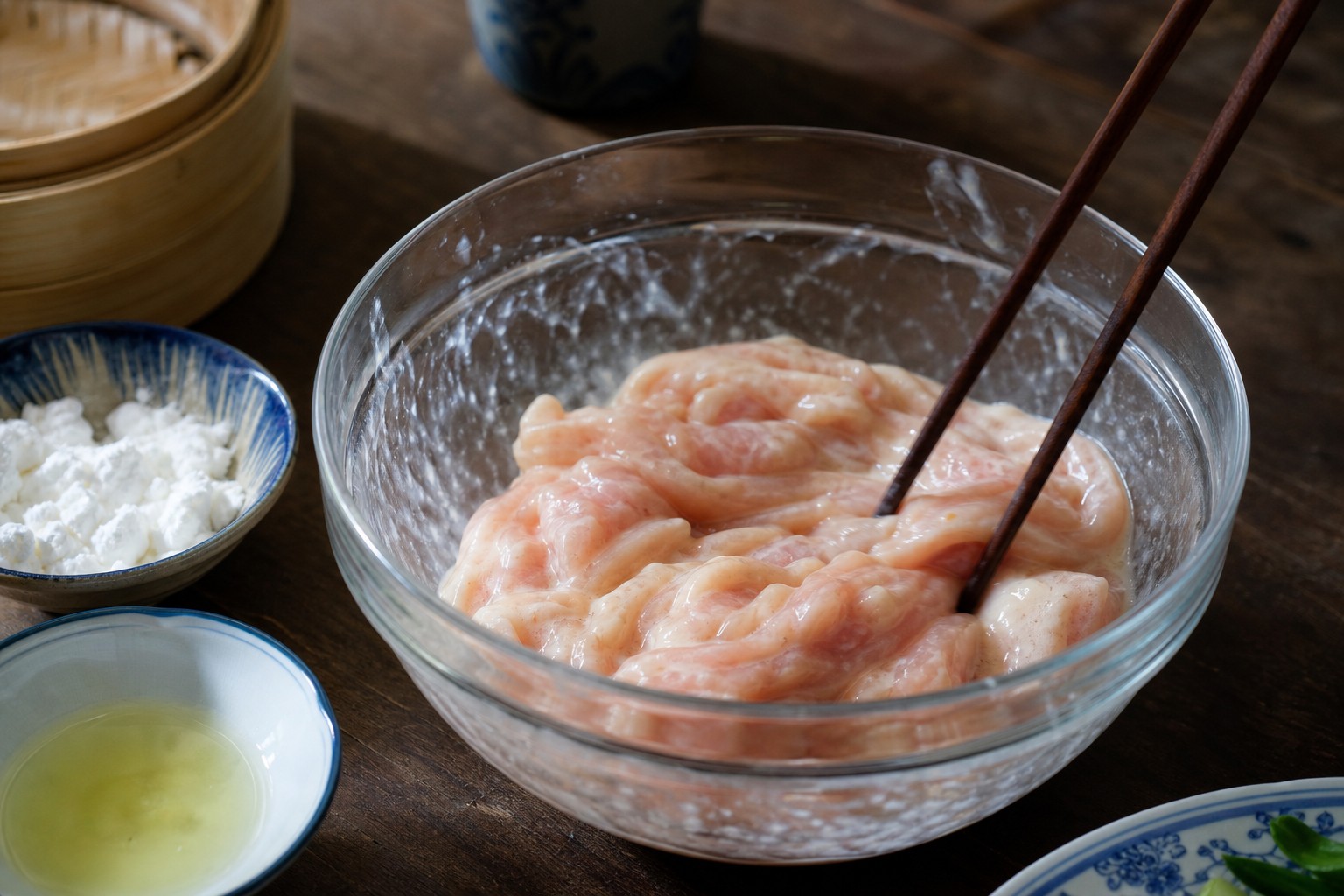
If there is one technique that explains the gap between home and restaurant stir-fries, it is not heat. It is velveting.
Velveting — shàng jiāng, “applying a coating” — is a family of methods for protecting meat before it hits a screaming hot pan. The result is the slippery, uniformly tender texture you get in a restaurant and almost never get at home, even from expensive cuts.
Method 1: Cornstarch and egg white
The classic. Toss sliced meat with egg white, cornstarch, a splash of Shaoxing wine, and salt, then rest 15 to 30 minutes.
The coating forms a thin barrier that takes the direct heat, so the meat behind it cooks more gently and holds its moisture. Best for chicken and shrimp, where you want tenderness without changing flavor.
Method 2: Baking soda
Toss sliced meat with baking soda (about ½ teaspoon per pound) and a little water, leave 15 minutes, then rinse thoroughly and pat dry.
Baking soda raises the pH at the meat’s surface, which prevents proteins from bonding as tightly when heated. Tightly bonded proteins squeeze out moisture and read as tough; loosely bonded ones stay tender.
This is the one that transforms cheap beef. Flank steak, skirt, or a bottom round treated this way comes out closer to tenderloin than to what you paid for.
The rinsing is not optional. Leave baking soda on and the meat tastes faintly soapy and metallic. Thirty seconds under running water, then a real pat-dry.
Method 3: Oil blanching
The restaurant version. Coated meat is dropped into 275–300°F oil for 30 to 45 seconds, just until it turns opaque, then drained and set aside. It goes back into the wok at the very end.
This gives the best texture of the three and is how most Cantonese kitchens do it. It is also messy and uses a quart of oil, which is why it is rare at home. If you are already deep frying for another dish, it is worth doing.
Which to use
| Meat | Method |
|---|---|
| Chicken breast or thigh | Cornstarch + egg white |
| Flank, skirt, sirloin | Baking soda, then cornstarch |
| Pork loin or shoulder | Cornstarch + egg white |
| Shrimp | Cornstarch + egg white, briefly |
Two rules that apply to all of them
Slice against the grain, and slice thin. No marinade rescues meat cut the wrong way. Look for the direction the muscle fibers run and cut across them, about ⅛ to ¼ inch thick. Freezing the meat for 20 minutes first makes thin slicing far easier.
Do not over-coat. You want a thin, barely visible film. A thick slurry turns gummy in the pan and tastes of raw starch.
What we use
The specific equipment and ingredients behind this guide.
- Baking soda
Half a teaspoon per pound of beef, fifteen minutes, rinsed off. The cheapest upgrade available to any stir-fry.
- Cornstarch
Forms the protective coating in all three velveting methods and doubles as your sauce thickener.
- Shaoxing cooking wine
Goes into nearly every marinade in Chinese cooking. Dry sherry is the closest substitute if your state does not sell it in grocery stores.
Keep reading
- What Is Wok Hei — And Can You Get It at Home? The smoky 'breath of the wok' that makes restaurant stir-fries taste different. What actually causes it, and how close a home stove can realistically get.
- 12 Chinese Pantry Essentials Worth Buying The sauces, vinegars, and pastes that unlock most Chinese recipes. What each one does, what to buy, and the three you can skip at first.
- Choosing a Wok for an American Stove Flat bottom or round, carbon steel or cast iron, what size — and why the wok most people buy first is the wrong one.